

Brain Balls
O epizodě podcastu
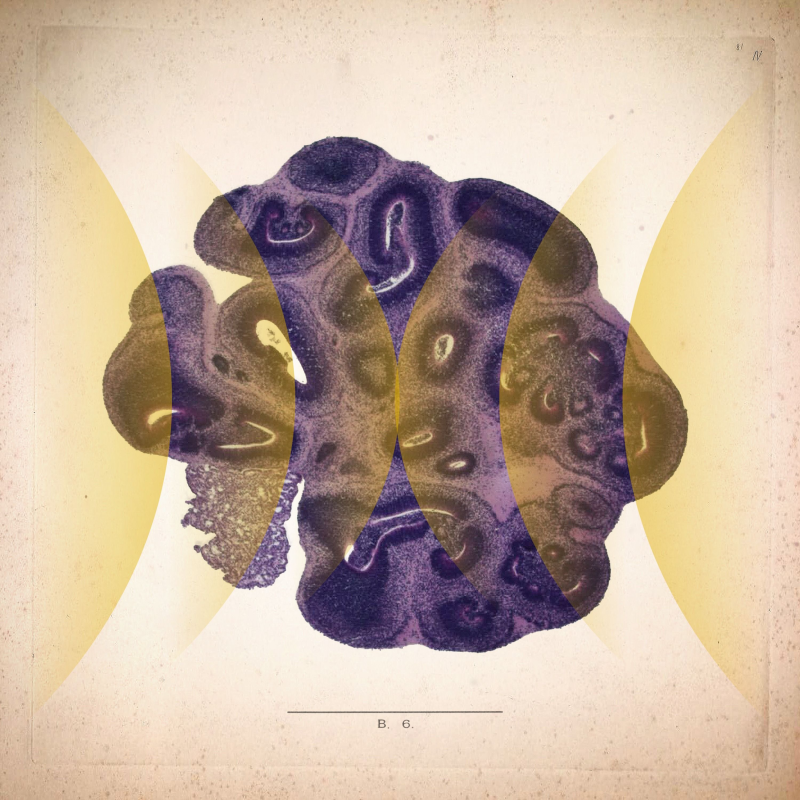
When neuroscientist Madeline Lancaster was a brand new postdoc, she accidentally used an expired protein gel in a lab experiment and noticed something weird. The stem cells she was trying to grow in a dish were self-assembling. The result? Madeline was the first person ever to grow what she called a “cerebral organoid,” a tiny, 3D version of a human brain the size of a peppercorn.
In about a decade, these mini human brain balls were everywhere. They were revealing bombshell secrets about how our brains develop in the womb, helping treat advanced cancer patients, being implanted into animals, even playing the video game Pong. But what are they? Are these brain balls capable of sensing, feeling, learning, being? Are they tiny, trapped humans? And if they were, how would we know?
Special thanks to Lynn Levy, Jason Yamada-Hanff, David Fajgenbaum, Andrew Verstein, Anne Hamilton, Christopher Mason, Madeline Mason-Mariarty, the team at the Boston Museum of Science, and Howard Fine, Stefano Cirigliano, and the team at Weill-Cornell.
EPISODE CREDITS:
Reported by - Latif Nasser
with help from - Mona Madgavkar
Produced by - Annie McEwen, Mona Madgavkar, and Pat Walters
with mixing help from - Jeremy Bloom
Fact-checking by - Natalie Middleton and Rebecca Rand
and Edited by - Alex Neason and Pat Walters
EPISODE CITATIONS:
Videos -
- “ Growing Mini Brains to Discover What Makes Us Human ,” Madeline Lancaster’s TEDxCERN Talk, Nov 2015 ( https://zpr.io/6WP7xfA27auR )
- Brain cells playing Pong ( https://zpr.io/pqgSqguJeAPK )
- Reuters report on CL1 computer launch in March 2025 ( https://zpr.io/cdMf8Yjvayyd )
Articles -
- Madeline Lancaster: The accidental organoid – mini-brains as models for human brain development ( https://zpr.io/nnwFwUwnm2p6 ), MRC Laboratory of Molecular Biology
- What We Can Learn From Brain Organoids (https://zpr.io/frUfsg4pxKsb), by Carl Zimmer. NYT, November 6, 2025
- Ethical Issues Related to Brain Organoid Research (https://zpr.io/qyiATHEhdnSa), by Insoo Hyun et al, Brain Research, 2020
- Brain organoids get cancer, too, opening a new frontier in personalized medicine ( https://zpr.io/nqMCQ ) STAT Profile of Howard Fine and his lab’s glioblastoma research at Weill Cornell Medical Center:
- By re-creating neural pathway in dish, Stanford Medicine research may speed pain treatment ( https://zpr.io/UnegZeQZfqn2 ) Stanford Medicine profile of Sergiu Pasca’s research on pain in organoids
- A brief history of organoids ( https://zpr.io/waSbUCSrL9va ) by Corrò et al, American Journal of Physiology - Cell Physiology,
Books -
Carl Zimmer Life’s Edge: The Search for What it Means to be Alive (https://carlzimmer.com/books/lifes-edge/)
Sign up for our newsletter!! It includes short essays, recommendations, and details about other ways to interact with the show. Signup (https://radiolab.org/newsletter)!
Radiolab is supported by listeners like you. Support Radiolab by becoming a member of The Lab (https://members.radiolab.org/) today.
Follow our show on Instagram , Twitter and Facebook @radiolab, and share your thoughts with us by emailing radiolab@wnyc.org .
Leadership support for Radiolab’s science programming is provided by the Simons Foundation and the John Templeton Foundation. Foundational support for Radiolab was provided by the Alfred P. Sloan Foundation.
When neuroscientist Madeline Lancaster was a brand new postdoc, she accidentally used an expired protein gel in a lab experiment and noticed something weird. The stem cells she was trying to grow in a dish were self-assembling. The result? Madeline was the first person ever to grow what she called a “cerebral organoid,” a tiny, 3D version of a human brain the size of a peppercorn.
In about a decade, these mini human brain balls were everywhere. They were revealing bombshell secrets about how our brains develop in the womb, helping treat advanced cancer patients, being implanted into animals, even playing the video game Pong. But what are they? Are these brain balls capable of sensing, feeling, learning, being? Are they tiny, trapped humans? And if they were, how would we know?
Special thanks to Lynn Levy, Jason Yamada-Hanff, David Fajgenbaum, Andrew Verstein, Anne Hamilton, Christopher Mason, Madeline Mason-Moriarty, the team at the Boston Museum of Science, and Howard Fine, Stefano Cirigliano, and the team at Weill-Cornell.
EPISODE CREDITS:
Reported by - Latif Nasser
with help from - Mona Madgavkar
Produced by - Annie McEwen, Mona Madgavkar, and Pat Walters
with mixing help from - Jeremy Bloom
Fact-checking by - Natalie Middleton and Rebecca Rand
and Edited by - Alex Neason and Pat Walters
EPISODE CITATIONS:
Videos -
- “ Growing Mini Brains to Discover What Makes Us Human ,” Madeline Lancaster’s TEDxCERN Talk, Nov 2015 ( https://zpr.io/6WP7xfA27auR )
- Brain cells playing Pong ( https://zpr.io/pqgSqguJeAPK )
- Reuters report on CL1 computer launch in March 2025 ( https://zpr.io/cdMf8Yjvayyd )
Articles -
- Madeline Lancaster: The accidental organoid – mini-brains as models for human brain development ( https://zpr.io/nnwFwUwnm2p6 ), MRC Laboratory of Molecular Biology
- What We Can Learn From Brain Organoids (https://zpr.io/frUfsg4pxKsb), by Carl Zimmer. NYT, November 6, 2025
- Ethical Issues Related to Brain Organoid Research (https://zpr.io/qyiATHEhdnSa), by Insoo Hyun et al, Brain Research, 2020
- Brain organoids get cancer, too, opening a new frontier in personalized medicine ( https://zpr.io/nqMCQ ) STAT Profile of Howard Fine and his lab’s glioblastoma research at Weill Cornell Medical Center:
- By re-creating neural pathway in dish, Stanford Medicine research may speed pain treatment ( https://zpr.io/UnegZeQZfqn2 ) Stanford Medicine profile of Sergiu Pasca’s research on pain in organoids
- A brief history of organoids ( https://zpr.io/waSbUCSrL9va ) by Corrò et al, American Journal of Physiology - Cell Physiology,
Books -
Carl Zimmer Life’s Edge: The Search for What it Means to be Alive (https://carlzimmer.com/books/lifes-edge/)
Sign up for our newsletter!! It includes short essays, recommendations, and details about other ways to interact with the show. Signup (https://radiolab.org/newsletter)!
Radiolab is supported by listeners like you. Support Radiolab by becoming a member of The Lab (https://members.radiolab.org/) today.
Follow our show on Instagram , Twitter and Facebook @radiolab, and share your thoughts with us by emailing radiolab@wnyc.org .
Leadership support for Radiolab’s science programming is provided by the Simons Foundation and the John Templeton Foundation. Foundational support for Radiolab was provided by the Alfred P. Sloan Foundation.